OpenAI builds Codex, and its team already publishes the best guidance on how to use it. Rather than rewrite that, this page points you to it. Everything below is made and kept up to date by OpenAI. We add a one-line summary so you can pick where to start.
Codex changes every few months, so we favor pages OpenAI keeps current over one-off posts. Talks and webinars show their date so you can tell how recent they are.
The short version
OpenAI's best-practices guide asks you to treat Codex less like a one-off assistant and more like a teammate you set up once and improve over time. In practice that means:
- Write prompts with four parts. Say the goal, the context Codex needs, the constraints, and what "done" looks like. Use lower reasoning effort for small, well-scoped tasks and higher for debugging or long changes.
- Plan before hard tasks. For anything complex or fuzzy, switch on Plan mode with
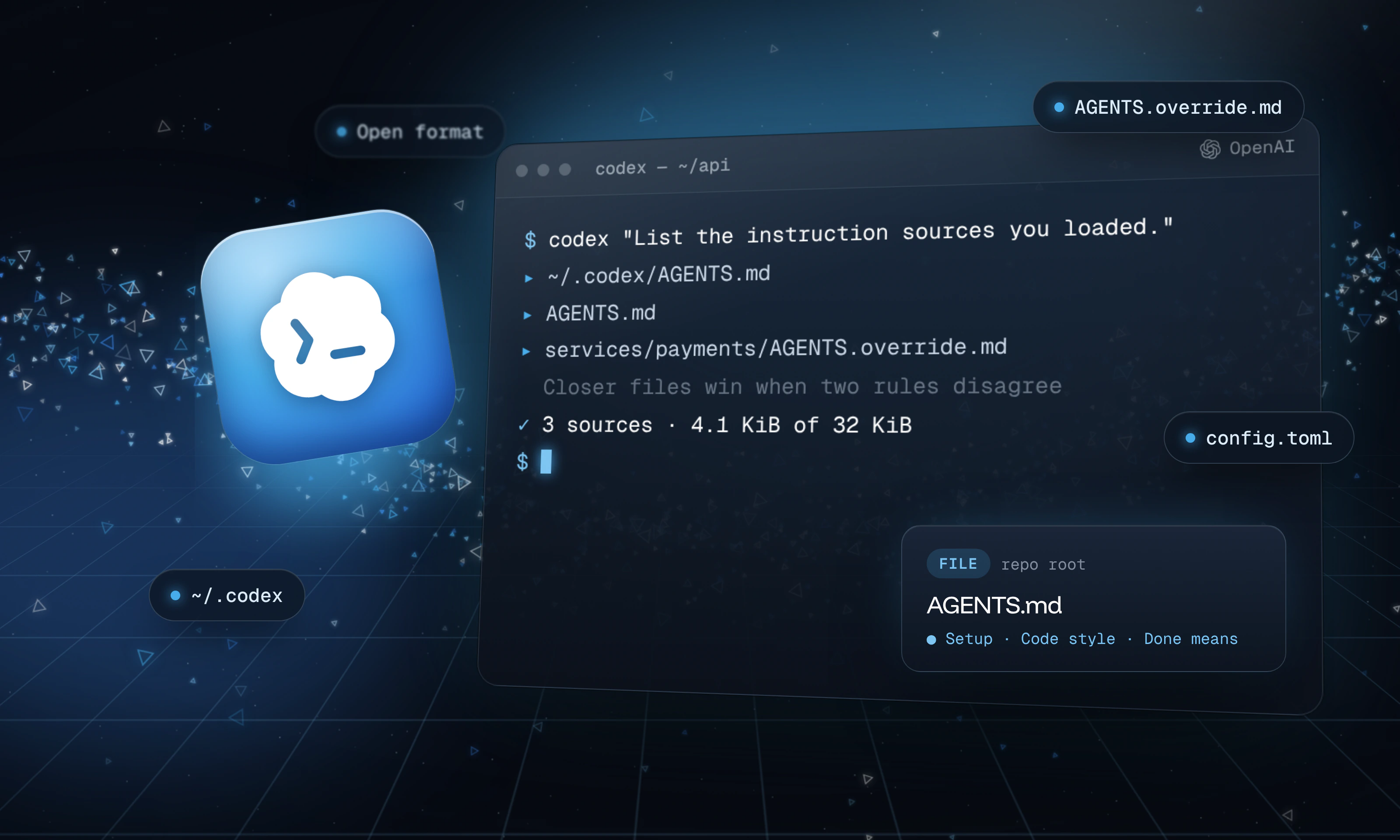
/planorShift+Tab, or ask Codex to interview you about the idea before it writes code. - Move repeated rules into AGENTS.md. Keep it short: how to build, test and lint, the conventions, and what done means. When Codex makes the same mistake twice, add a line. Our AGENTS.md guide shows how.
- Let it check its own work. Ask Codex to write or update tests and run the checks, then review the diff with
/reviewbefore you accept it. Start with the default permissions and loosen them only for repos you trust. - Keep chats focused. Use one chat per piece of work rather than one for the whole project, which bloats the context and gets worse over time. Turn a prompt you keep reusing into a skill, and only schedule a task once it works reliably by hand.
Start here
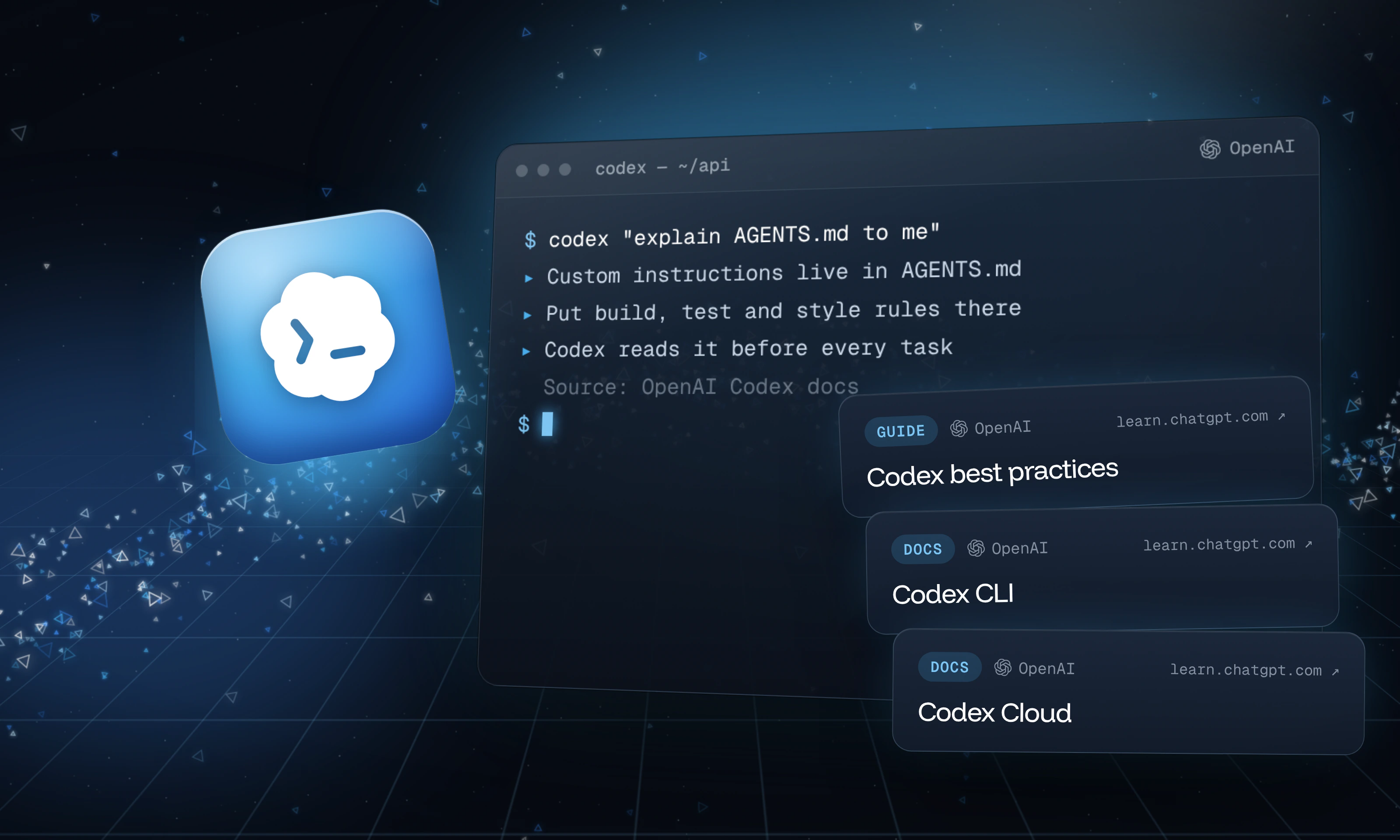
- GuideOpenAICodex best practiceslearn.chatgpt.com
OpenAI's own guide to better results across the Codex CLI, IDE extension and app: prompting, planning, AGENTS.md, testing and review, MCP, skills, and common mistakes. If you read one thing, read this.
- DocsOpenAICodex documentationlearn.chatgpt.com
The home of OpenAI's Codex docs, with use cases, setup guides and the latest product updates.
- DocsOpenAICodex CLIlearn.chatgpt.com
Install the CLI, sign in and run your first task in the terminal, with links to the command reference and automation.
- DocsOpenAICodex IDE extensionlearn.chatgpt.com
Use Codex in VS Code, Cursor, Windsurf, Xcode or JetBrains, review edits inline, and hand longer tasks to the cloud.
- DocsOpenAICodex Cloudlearn.chatgpt.com
Run coding tasks remotely: set up a cloud environment, control network access and secrets, and review changes before you open a PR.
Set up your project
- DocsOpenAICustom instructions with AGENTS.mdlearn.chatgpt.com
How Codex finds and combines AGENTS.md files, from a global file down to per-folder overrides.
- DocsOpenAIConfig basicslearn.chatgpt.com
Set defaults in config.toml, such as the model, approval prompts and sandbox level, for you or for one project.
- DocsOpenAIAgent approvals and securitylearn.chatgpt.com
Run Codex safely with sandboxing, approval policies and network controls.
- DocsOpenAIBuild skillslearn.chatgpt.com
Package instructions, resources and scripts as skills that extend Codex, and share them as plugins.
- DocsOpenAIModel Context Protocollearn.chatgpt.com
Connect Codex to outside tools by adding MCP servers.
Stay current
- Release notesOpenAIChatGPT and Codex changeloglearn.chatgpt.com
Dated release notes for the Codex CLI, the Codex app and ChatGPT.
- BlogOpenAICodex posts on the OpenAI Developers blogdevelopers.openai.com
OpenAI's developer blog posts about Codex, newest first.
- CookbookOpenAICodex in the OpenAI Cookbookdevelopers.openai.com
Worked examples for automating developer workflows and building with Codex agents and tools.
Courses and training
- CoursesOpenAI AcademyCodex on OpenAI Academyopenai.com
OpenAI Academy's Codex hub for learning to write code, run tasks and build automated workflows.
- WebinarOpenAI AcademyMarch 2026Codex Fundamentalsacademy.openai.com
A recorded OpenAI Academy webinar on the fundamentals of working with Codex. Free sign-in to watch.
Talks and videos
- VideosOpenAIChatGPT and Codex videoslearn.chatgpt.com
OpenAI's library of Codex demos, walkthroughs and talks, grouped by topic.
- Learning hubOpenAI DevelopersLearn Codexdevelopers.openai.com
OpenAI's Codex learning page, with product videos on the Codex app, code review, JetBrains and building frontends.